Web development
The Importance of Responsive Web Design in 2026
IIn 2026, your website is no longer just a digital presence; it is your primary revenue engine. If your website fails to deliver a seamless multi-device
By Best Web Design | Published 3 March 2026 · Updated 1 July 2026 · 4 min read
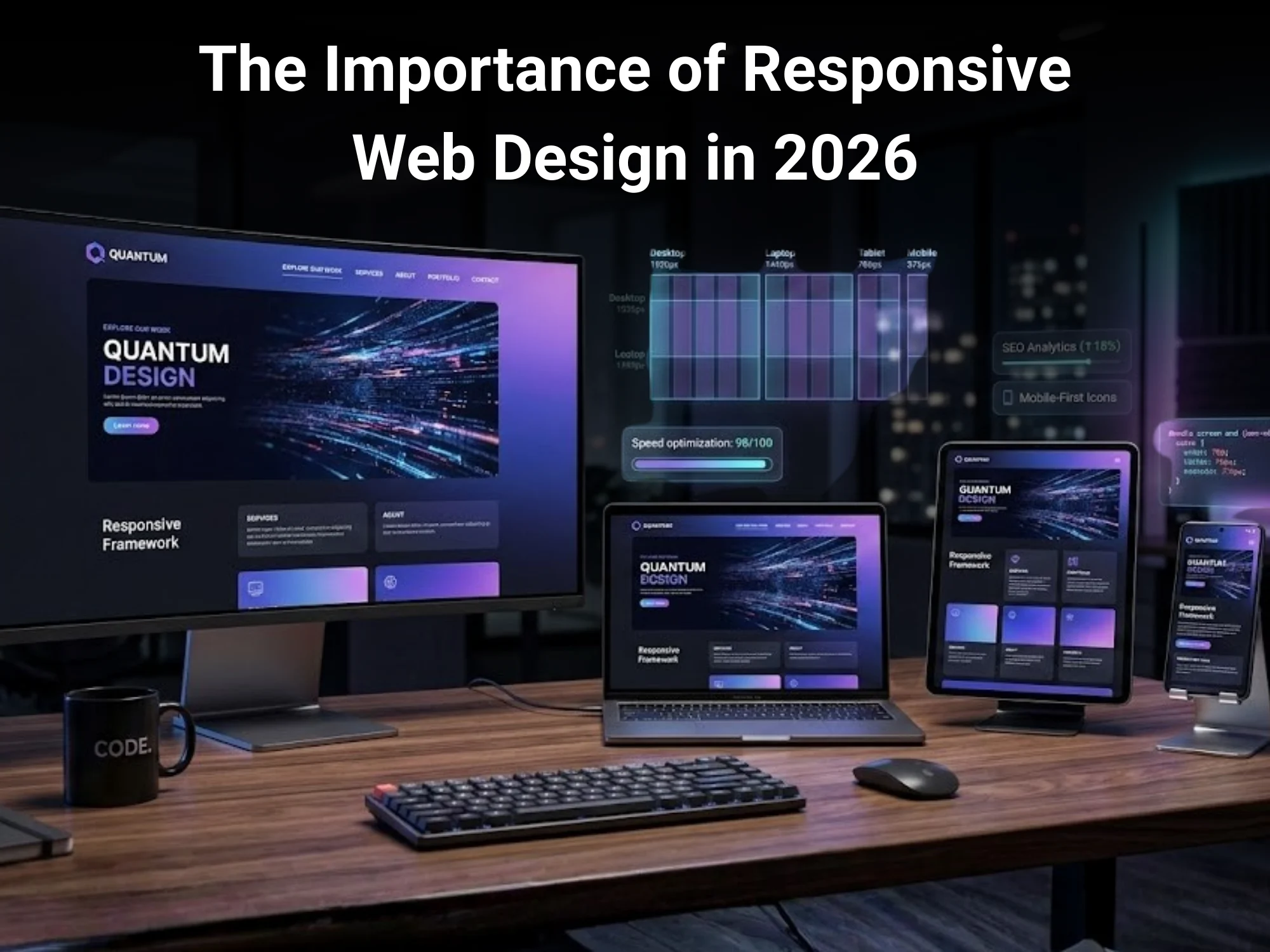

In 2026, your website is no longer just a digital presence; it is your primary revenue engine. If your website fails to deliver a seamless multi-device experience through responsive web design, you are losing customers before they even engage with your brand.
With over 70% of global web traffic coming from mobile devices, businesses that ignore mobile optimization risk lower Google rankings, poor user engagement, and declining conversions.
Google’s mobile-first indexing now evaluates the mobile usability score and technical SEO performance of your website before ranking it. That means your desktop design alone no longer determines visibility.
At Best Web Design, we have seen firsthand how modern responsive web design improves search intent alignment, user engagement signals, and conversion rates across industries.
This guide explains why responsive web design is not optional in 2026; it is essential for sustainable online growth.
What is Responsive Web Design?
Responsive web design is a mobile-first development approach that allows a website to automatically adapt to different screen sizes, devices, and orientations.
Instead of building separate mobile and desktop websites, responsive websites use:
- Flexible grid systems
- Fluid images and dynamic scaling
- CSS media queries
- Adaptive typography
- Viewport-based layouts
- Device compatibility frameworks
This ensures consistent navigation, readability, and performance across smartphones, tablets, laptops, desktops, and smart devices.
Responsive vs Adaptive Design in 2026
| Feature | Adaptive Design | Responsive Design |
| Layout | Fixed breakpoints | Fluid grid system |
| Scalability | Limited | Highly scalable |
| SEO Performance | Moderate | Strong |
| Maintenance | Complex | Easier |
| Mobile Optimization | Device-specific | Universal compatibility |
In 2026, responsive design is preferred because it supports Google ranking factors, Core Web Vitals optimization, and long-term scalability.
Why Responsive Web Design is Critical in 2026
1. Mobile-First Indexing and Google Rankings
Google prioritizes the mobile version of your website for indexing and ranking.
If your site:
- Loads slowly
- Displays broken layouts
- Hides content on mobile
- Has poor UX signals
Your visibility in search results drops significantly.
Responsive web design improves:
- Crawlability
- Indexing efficiency
- Mobile usability score
- Page speed
- Search engine trust
2. Enhanced User Experience (UX Signals)
User experience is now a major ranking factor. Search engines analyze:
- Bounce rate
- Session duration
- Interaction depth
- Click-through behavior
A responsive website ensures:
- Readable text without zooming
- Clear CTA buttons
- Easy navigation
- Smooth scrolling
- Optimized images
This improves engagement and brand credibility.
3. Higher Conversion Rates
A seamless multi-device experience removes friction between users and your services.
When:
- Forms load quickly
- Checkout pages function smoothly
- Contact buttons are accessible
Users are more likely to convert.
How Responsive Web Design Improves SEO in 2026
Core Web Vitals Optimization
Google measures:
- Largest Contentful Paint (LCP)
- Interaction to Next Paint (INP)
- Cumulative Layout Shift (CLS)
Responsive websites improve layout stability and loading performance, which strengthens search visibility.
Improved Page Speed
Mobile optimization includes:
- WebP image formats
- Lazy loading
- Minified CSS and JavaScript
- CDN integration
- Efficient caching
Page speed remains a direct ranking factor in 2026.
Better Structured Data Integration
Responsive websites support schema markup more effectively, increasing chances of appearing in:
- Featured snippets
- Rich results
- Voice search answers
Technical Implementation of Modern Responsive Design
Advanced responsive websites in 2026 include:
- Mobile-first CSS architecture
- Viewport meta tag optimization
- Server-side rendering (SSR)
- Progressive enhancement
- API-driven dynamic content
- AI-based user personalization
- 5G performance compatibility
This ensures long-term technical SEO performance and scalability.
Key Features of Responsive Websites in 2026
AI-Powered Personalization
Websites adapt content based on behavior and location.
Voice Search Optimization
Optimized for conversational search queries.
Dark Mode Compatibility
Supports modern user interface preferences.
Progressive Web Apps (PWA)
Combines an app-like experience with website accessibility.
Accessibility Compliance (WCAG)
Ensures inclusive design for all users.
Common Responsive Design Mistakes to Avoid
- Slow mobile loading speed
- Poor image compression
- Blocking JavaScript resources
- Incorrect font scaling
- Hidden content on mobile
- Ignoring UX signals
Avoiding these mistakes strengthens both SEO and user experience.
Industry Benefits of Responsive Web Design
Responsive websites benefit:
- E-commerce businesses
- Healthcare providers
- Educational institutions
- Corporate brands
- Real estate agencies
- Professional service firms
Every industry now relies on mobile-first search behavior.
Business Impact of Responsive Web Design
Businesses investing in responsive development experience:
- Increased organic traffic
- Higher engagement rates
- Better search engine rankings
- Stronger brand credibility
- Improved ROI from digital marketing
Your website is often the first impression of your business. A poorly optimized site damages trust instantly.
Future of Responsive Web Design Beyond 2026
The future includes:
- Augmented reality interfaces
- Smart device synchronization
- AI-driven UI testing
- Advanced personalization engines
- Automated performance optimization
Businesses that adapt early will maintain a competitive advantage.
Conclusion
The digital landscape in 2026 demands flexibility, speed, and search intent optimization. Responsive web design is no longer a trend; it is a competitive necessity.
From improved Core Web Vitals and stronger SEO rankings to higher conversions and better user engagement, the benefits are measurable and long-term.
If your website is not optimized for multi-device compatibility, you are losing visibility, traffic, and revenue.
Partner with Best Web Design to build a high-performance, SEO-optimized, fully responsive website that delivers measurable business growth in 2026 and beyond. Contact us today to get started.

FAQS
Frequently asked questions
Why is Responsive Web Design important for SEO?
Does responsive design increase conversions?
How long does it take to build a responsive website?
Is Responsive Design mandatory in 2026?
Keep exploring

Web development
Web Development Company Services: From Custom Websites to Web Applications
Every business today needs more than an online presence. It needs a digital platform that works as hard as the team behind it. This is exactly
Web development

Web development
Website Accessibility (WCAG) Guide for South African Businesses in 2026
Website accessibility means designing a site so people with visual, auditory, motor, or cognitive disabilities can use it fully.
Web development

Web development
Core Web Vitals Explained: How Page Speed Affects Rankings and Conversions in South Africa
Core Web Vitals are three Google metrics, loading speed, interactivity, and visual stability, that measure real-world user experience and directly influence search rankings.
Web development